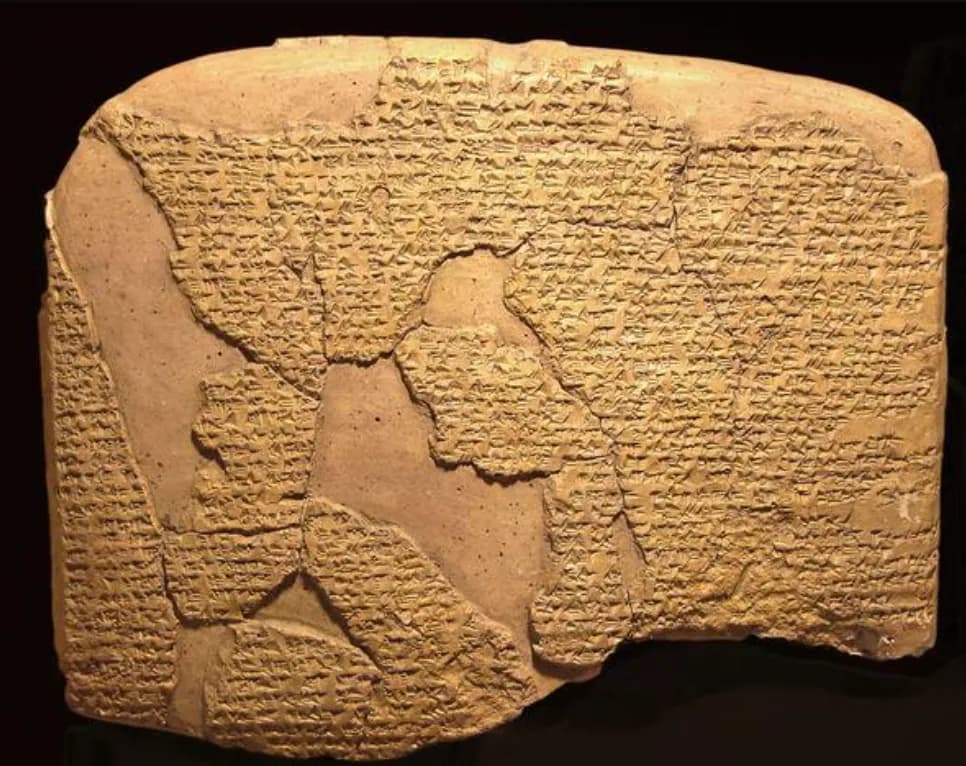
HATTUSA, TÜRKIYE — Archaeologists have identified a cuneiform tablet fragment from the ancient Hittite capital of Hattusa as part of the Treaty of Kadesh, one of the oldest surviving international peace agreements. The discovery provides additional evidence of diplomatic relations between Egypt and the Hittite Empire more than 3,200 years ago.
Türkiye's Ministry of Culture and Tourism announced the discovery on September 21, 2026, after researchers spent approximately one year examining the artifact. The fragment was recovered during excavations at Büyükkale, an area of Hattusa associated with the Hittite royal palace.
Researchers determined that the inscription belonged to the Treaty of Kadesh, an agreement established around 1269 B.C. between Egyptian Pharaoh Ramesses II and Hittite King Hattusili III. The treaty followed years of conflict between the two powerful civilizations over territories in the ancient Near East, including areas of modern-day Syria.
The agreement established commitments to peace, cooperation, and mutual assistance between the kingdoms. The newly identified fragment contains portions addressing people who fled from one kingdom to another, including provisions concerning their treatment and protection. The text was written in Akkadian cuneiform, a writing system commonly used for diplomatic communication throughout the ancient Near East.
Other copies and fragments of the Treaty of Kadesh have been discovered previously, including tablets recovered at Hattusa during excavations beginning in 1906. The newly identified piece adds to the surviving historical evidence and may help researchers better understand how ancient civilizations negotiated peace, maintained international relationships, and addressed the movement of people across political boundaries.
The discovery also provides valuable historical context for readers of Scripture. The Hittites are mentioned in several books of the Hebrew Bible, including Genesis, Joshua, and Kings. However, scholars distinguish between the powerful Hittite Empire centered in Anatolia and groups identified as Hittites in the biblical land of Canaan. The newly identified fragment belongs to the Anatolian Hittite civilization and does not directly establish the identity of every group called Hittite in Scripture.
For the Whole Bible Community, archaeological discoveries such as this offer opportunities to better understand the historical world surrounding the biblical narrative. Ancient kingdoms, diplomatic agreements, languages, and political relationships help illuminate the civilizations that existed during the periods described in Scripture.
The Treaty of Kadesh also demonstrates that questions involving peace, political alliances, justice, and the treatment of displaced people were important concerns thousands of years ago. As archaeological research continues at Hattusa, additional discoveries may provide further insight into the relationships between ancient civilizations and the historical setting of the biblical world.
Reference:
biblearchaeologyreport/2026/10/07/top-three-reports-in-biblical-archaeology-september-2026/
anadoluajansi/en/culture/tablet-fragment-found-in-turkiye-adds-piece-to-world-s-oldest-known-peace-treaty/4063280
biblicalarchaeology/daily/ancient-cultures/fragment-of-worlds-oldest-peace-treaty-found/