Food, Housing and Energy Costs Rise in Latest U.S. Inflation Report
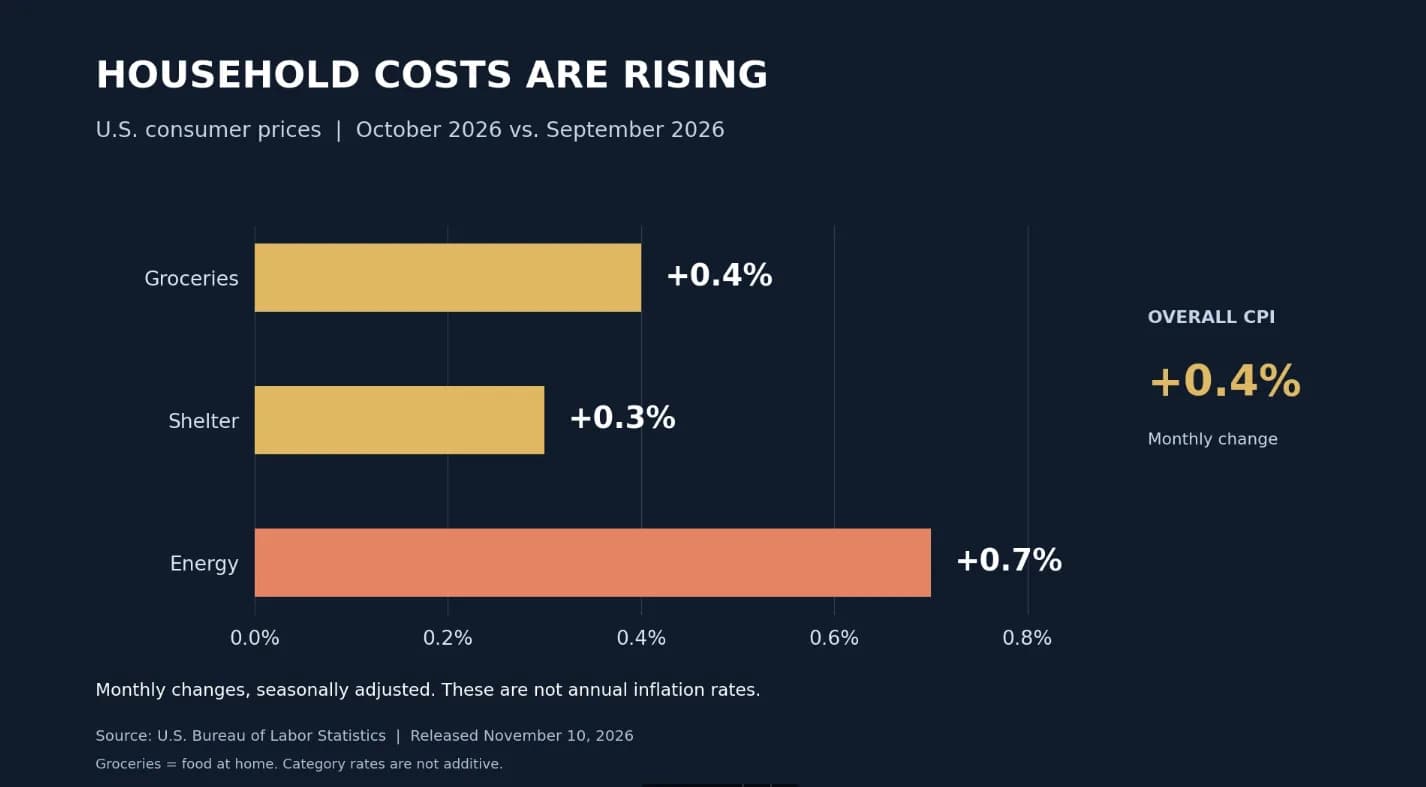
U.S. consumer prices increased 0.4% in October, with food, shelter and energy all contributing to higher household costs, according to figures released November 10 by the Bureau of Labor Statistics.
The monthly increase followed a 0.6% rise in September. Prices were therefore still increasing, although the overall monthly pace slowed. A smaller inflation reading does not mean that the overall price level fell.
Grocery prices, measured by the food-at-home index, rose 0.4%. Food purchased away from home increased 0.5%, while the broader food index also rose 0.5% during the month.
Shelter costs increased 0.3% and accounted for more than 30% of the overall monthly rise. Energy prices increased 0.7%, following a much larger 5.2% increase in September, according to the release.
The index excluding food and energy rose 0.3%, matching the increases recorded in August and September. These figures are seasonally adjusted monthly changes, rather than annual inflation rates.
The Associated Press reported that the government did not publish an October year-over-year inflation rate because the 2025 shutdown had interrupted collection of the comparison data. The monthly results should not be relabeled as a twelve-month measure.
The Consumer Price Index for All Urban Consumers, or CPI-U, tracks price changes across goods and services purchased by urban households. BLS says the population covered by that index represents more than 90% of the U.S. population.
Its coverage includes major spending groups such as food, housing, transport, medical care, recreation, education and communications. Consumer sales taxes and certain user fees are included, while income taxes and investment purchases are excluded.
The national figures describe broad price movements rather than the exact experience of each family. For readers comparing household expenses, the report distinguishes changes in individual spending categories from the overall index; the category percentages should not be added together to calculate a family’s inflation rate.
References
U.S. Bureau of Labor Statistics — November 10, 2026
bls/news.release/archives/cpi_11102026.htm
U.S. Bureau of Labor Statistics — Background; publication date unspecified
bls/cpi/overview.htm
The Associated Press — November 10, 2026
apnews/article/fcd3c7766d3cdb36057f6dab19ff3a8e