Federal Appeals Court Hears North Carolina Church’s Zoning Dispute
A federal appeals panel heard arguments October 27 over an order preventing North Carolina’s Chatham County from denying a church’s rezoning application while a religious-land-use lawsuit proceeds.
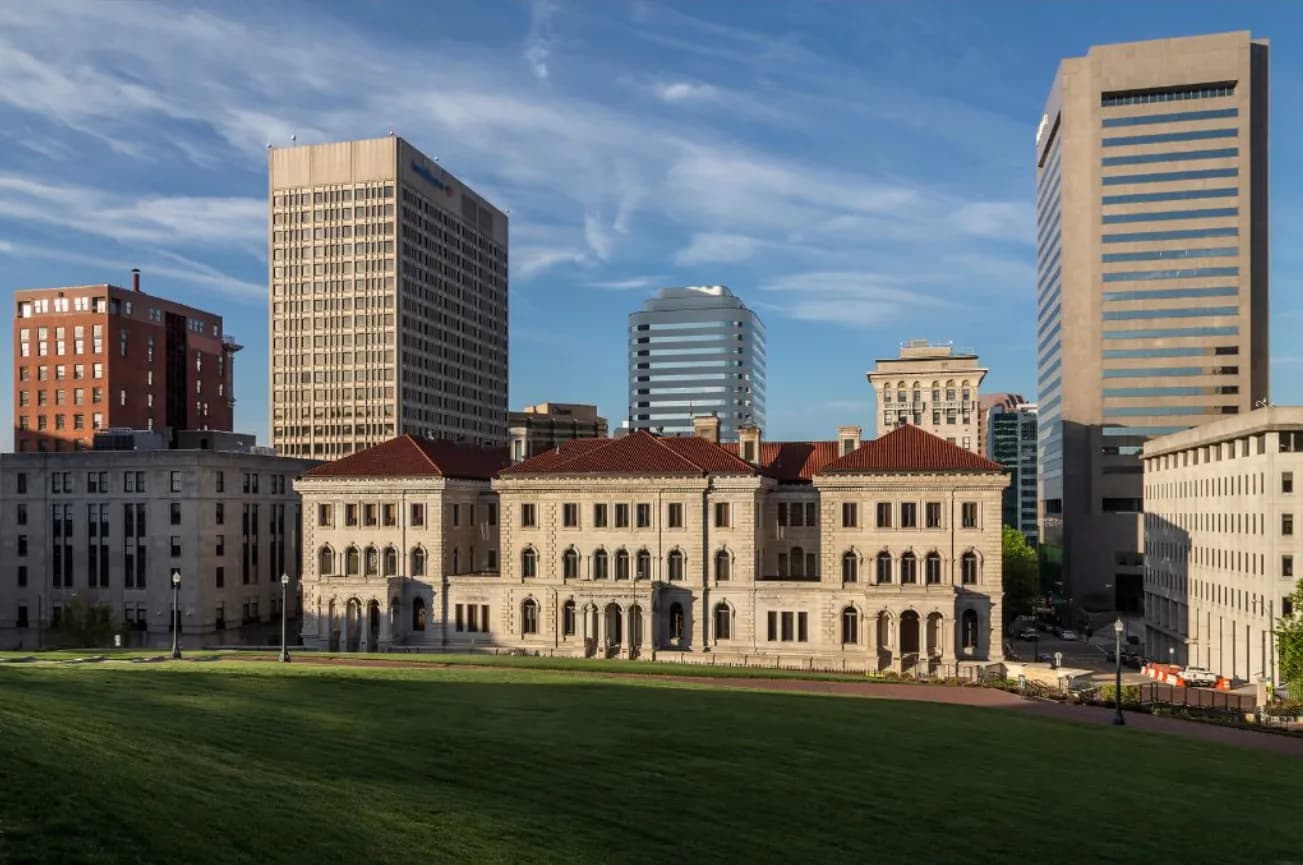
The hearing at the Fourth U.S. Circuit Court of Appeals in Richmond, Virginia, concerns The Summit Church’s proposed campus in northeastern Chatham County. An October 30 account published by Baptist Press said the three-judge panel took the appeal under advisement without announcing when it would rule.
The church acquired an option in December 2023 to purchase six parcels totaling about 97 acres. It later sought rezoning for roughly 50 acres to build a permanent campus for its Chapel Hill congregation, which holds services at East Chapel Hill High School.
County commissioners unanimously rejected the application in December 2024. The church alleges religious discrimination; the county rejects that claim and says the proposal conflicted with its land-use plan. The underlying lawsuit has not produced a final ruling on those claims.
The church sued in February 2025 under the Religious Land Use and Institutionalized Persons Act, commonly called RLUIPA. A federal district judge issued a preliminary injunction in June 2025 barring the county from denying the application, but did not order it to approve rezoning.
The distinction is central to the appeal. County attorney Steven Bader argued that the injunction improperly intrudes on the authority of elected commissioners. He maintained that conditional rezoning is a legislative decision under North Carolina law and that a federal court cannot dictate its outcome.
The church’s attorney, Elbert Lin, argued that the order does not require an immediate zoning change and instead preserves the application while litigation continues. The Justice Department, supporting the church, argued that state-law descriptions of zoning decisions cannot remove them from federal religious-land-use protections.
In its appellate brief, the department urged the court to uphold the injunction. RLUIPA prohibits religious discrimination in land-use regulation and restricts substantial burdens on religious exercise, subject to the statute’s requirements. Whether the county’s handling of this application violated those protections remains disputed.
The appeal concerns the scope of interim relief, while the broader lawsuit remains pending. A preliminary finding that a claimant is likely to succeed does not resolve the case. The appellate panel’s decision will determine whether the injunction remains in place as litigation continues.
References
Baptist Press / Biblical Recorder — October 30, 2026.
Hearing: October 27, 2026.
baptistpress/resource-library/news/federal-appeals-court-hears-arguments-in-summit-churchs-zoning-case
U.S. Department of Justice — appellate brief, case 25-1832.
Publication date unspecified; accessed November 2, 2026.
justice/crt/media/1433651/dl
The Summit Church — Chapel Hill campus page.
Publication date unspecified; accessed November 2, 2026.
summitchurch/campus/chapel-hill
U.S. Department of Justice — RLUIPA statutory text.
Accessed November 2, 2026.
justice/crt/religious-land-use-and-institutionalized-persons