Israeli Hospital Performs Country’s First Robotic-Assisted Lung Transplant
Surgeons at Beilinson Hospital in Petah Tikva have performed what the hospital describes as Israel’s first robotic-assisted lung transplant, using small incisions rather than fully opening the patient’s chest and spreading the ribs.
The procedure was reported by The Jerusalem Post on November 4. Earlier Hebrew reporting published November 3 said the operation took place in October, but did not give an exact date. The hospital is part of the Clalit healthcare group.
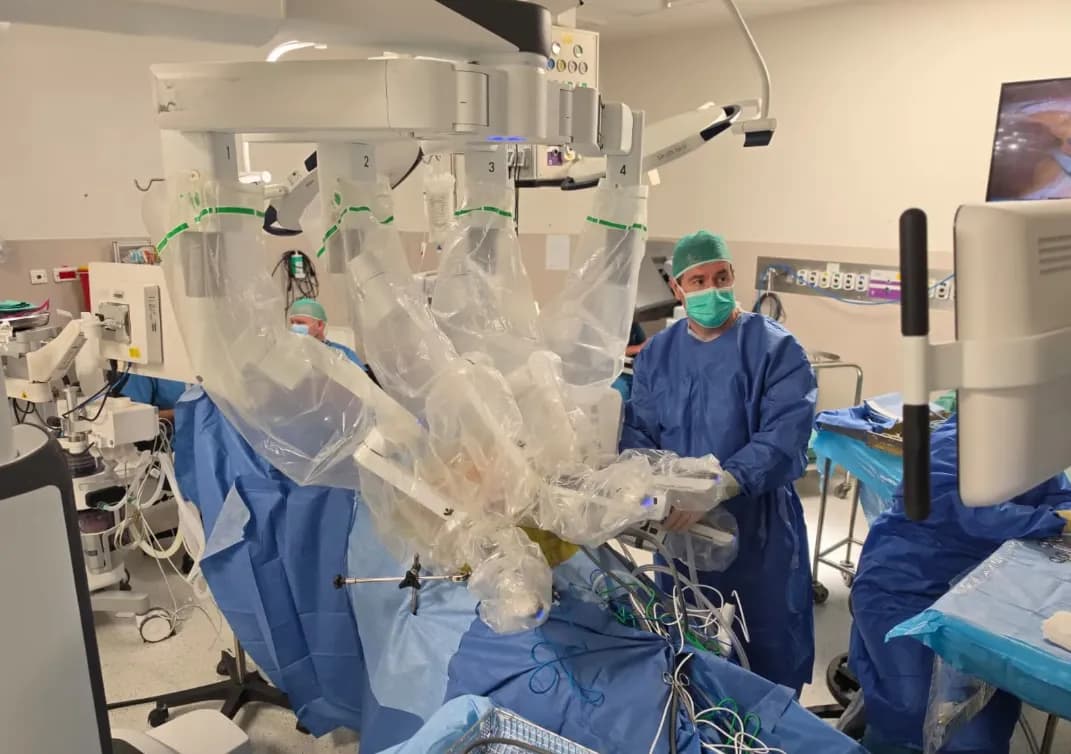
Using the Da Vinci robotic system, surgeons connected the donor lung to the patient’s blood vessels and airways. Dr. Yury Peysakhovich, director of thoracic surgery, led the operation and described it as an important development for lung transplantation in Israel.
The approach is intended to reduce the physical disruption associated with larger chest incisions. Hospital doctors explained that significant postoperative pain can make deep breathing, coughing and clearing secretions difficult, complicating recovery after a transplant.
Dr. Dan Gorfil, director of the cardiothoracic surgery intensive-care unit, said this patient’s recovery exceeded the team’s expectations. The patient required almost no pain relief beyond paracetamol, according to the hospital’s account, and spent less time in intensive care and hospital than anticipated.
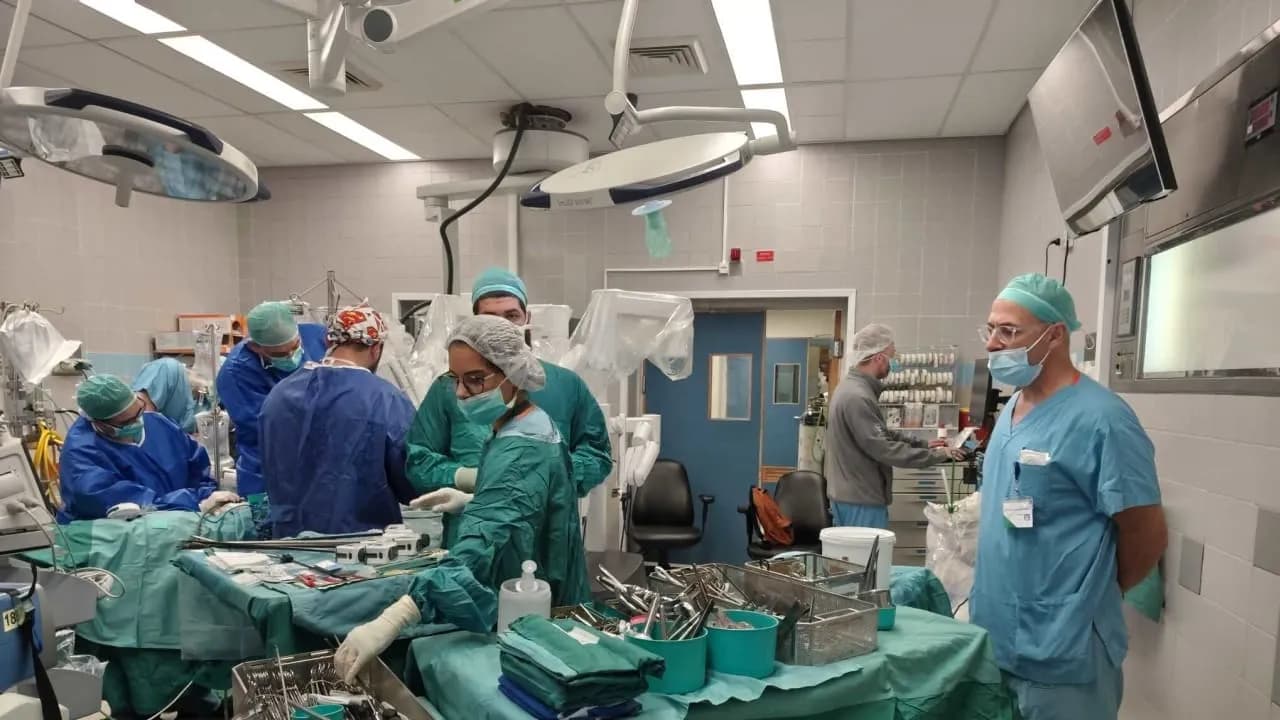
The operation required extensive planning and coordination among dozens of professionals. Teams included surgeons, anesthetists, operating-room nurses, lung specialists, heart-lung machine operators, intensive-care staff and the tissue-typing laboratory.
Dr. Shay Fine, who heads anesthesia and operating rooms, said the robotic arms limited direct access to the patient, making advance preparation for emergencies particularly important. Staff rehearsed the procedure in a dedicated simulation and planned ventilation, monitoring and rapid support if needed.
The hospital had also carried out a minimally invasive lung transplant without a robot approximately a month earlier, according to Hebrew reporting. That operation likewise sought to avoid a wide chest opening and provided experience with a less invasive approach.
Doctors hope robotic techniques will become more widely used, but the results described are from an individual patient. Davar reported that comparative figures for transplant rejection and mortality were not yet available because the technology had not been used broadly. The encouraging early recovery does not establish that the approach is suitable for every transplant recipient.
References
The Jerusalem Post — November 4, 2026, 5:07 p.m.
jpost/health-and-wellness/article-913821
Melabes — November 3, 2026, 2:52 p.m.
Reports operation occurred in October 2026.
melabes/health/107511
Davar — November 3, 2026, updated 5:56 p.m.
davar1/705508